 Skip to content
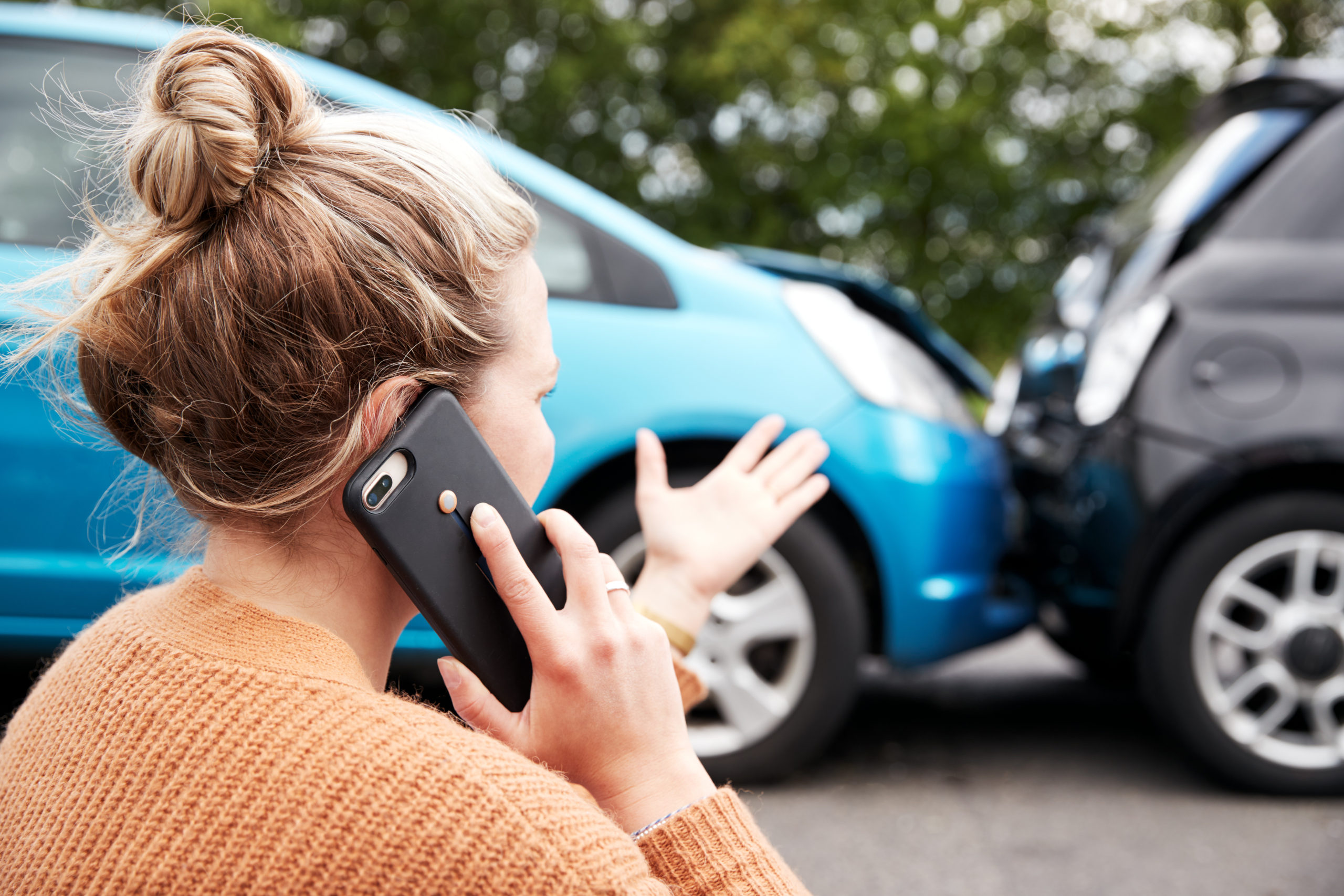
You know your light was green.
Unfortunately, the other driver says exactly the same thing.
Welcome to one of the most frustrating versions of a car accident claim.
Intersection collisions can happen in seconds. One vehicle enters the intersection. Another crosses its path. Metal collides with metal, airbags deploy, and by the time everyone has climbed out of the wreckage, two completely different versions of the accident may already exist.
“He ran the red light.”
“No. She did.”
When there is no obvious answer, the insurance company doesn’t simply take your word for it.
So how do you prove who actually had the green light?
The answer may be hiding in far more places than most accident victims realize.
Why Intersection Accidents Become So Complicated
An intersection requires multiple drivers to make decisions at nearly the same time.
Drivers may be:
- Traveling straight
- Turning left
- Turning right
- Entering from side streets
- Yielding to pedestrians
- Responding to changing traffic signals
- Navigating turn arrows
- Watching vehicles entering from multiple directions
Add distraction, speeding, poor visibility, unfamiliar roads, or a driver trying to “make the light,” and the opportunity for a serious collision increases.
After the crash, determining who had the right of way may become the central issue in an injury claim.
“But I Know My Light Was Green”
You may be absolutely correct.
The problem is proving it.
Insurance companies evaluate evidence, not simply confidence.
When both drivers insist they had the green light, an adjuster may initially see two competing statements.
That means the investigation needs to look outward.
Who else saw the crash?
What cameras were nearby?
Where did the vehicles collide?
Where did they stop?
What does the physical damage show?
What did each person say immediately afterward?
A strong investigation begins with a simple idea:
Don’t stop at the drivers’ stories.
Start With Independent Witnesses
An independent witness can be enormously valuable in a disputed intersection collision.
Maybe another driver was stopped at the light. Perhaps a pedestrian was waiting to cross.
A cyclist may have seen the entire sequence.
Someone working at a nearby business may have been looking out the window when the crash occurred.
These people generally have no financial interest in the outcome of the claim, which can make their observations particularly useful.
If you’re physically able after a collision, ask witnesses for:
- Name
- Phone number
- Email address
- A brief description of what they observed
Don’t assume police officers will identify every witness.
People leave accident scenes.
Traffic starts moving again.
Someone who saw exactly what happened may be gone five minutes later.
Look for Dash Cam Footage
Dash cams have quietly changed car accident investigations.
A camera mounted in your vehicle may show:
- The traffic signal
- Your speed and direction of travel
- The other vehicle entering the intersection
- A turn arrow
- Lane positions
- Events immediately before impact
But your vehicle isn’t the only possible source. Another motorist may have captured the collision. A rideshare driver waiting at the intersection may have a camera. A commercial truck may have video. Even a vehicle that wasn’t involved in the crash could hold the best evidence in the case.
If you have dash cam footage, preserve it immediately. Many cameras use loop recording and may automatically overwrite older files. For more on preserving this evidence, see our guide: Can Dash Cam Footage Help Your Missouri Car Accident Claim?
Nearby Businesses May Have Recorded the Accident
Now look around the intersection.
Is there a gas station?
Bank?
Restaurant?
Convenience store?
Apartment building?
Parking garage?
Office?
Many businesses and properties use exterior security cameras. A camera doesn’t necessarily need to be pointed directly at the intersection to be useful. It might capture:
- Traffic movement
- The signal itself
- Vehicles approaching the intersection
- The moment of impact
- Events immediately afterward
The catch?
Surveillance footage doesn’t necessarily live forever.
Many systems automatically overwrite recordings after a certain amount of time. That’s why identifying potential video evidence quickly can matter. By the time someone thinks to ask for footage several months later, it may no longer exist.
What About Traffic Cameras?
People often assume every camera mounted near a traffic signal is continuously recording and that the footage can simply be requested after a crash.
Reality can be more complicated.
Different cameras serve different purposes. Some may be used for traffic monitoring or signal operation rather than permanent video recording. Whether footage exists, is retained, or can be obtained depends on the particular system involved.
The important lesson is this:
Don’t assume footage exists, but don’t assume it doesn’t either.
An investigation should identify potential sources and determine what information may be available.
Your Phone Can Help Document the Scene
After an accident, your phone becomes an evidence-gathering tool. If you’re able to do so safely, photograph:
- The entire intersection
- Traffic signals
- Turn arrows
- Stop signs
- Lane markings
- Vehicle positions
- Damage to each vehicle
- Skid marks
- Debris
- Sight obstructions
- Construction
- Weather conditions
Take wide photographs and close-ups.
Context matters.
A close-up of your damaged bumper may document the damage beautifully while revealing almost nothing about how the crash occurred. A photograph showing where both vehicles stopped in relation to the intersection may tell a much larger story.
Vehicle Damage Can Tell a Story
Cars don’t give statements, but their damage can provide clues.
Consider where the impact occurred.
Was one vehicle struck directly in the driver’s side door?
Was the damage concentrated on the front corner of one vehicle?
Was the impact almost head-on?
Where did each vehicle travel after impact?
The location and pattern of vehicle damage may help investigators understand the direction of travel and mechanics of the collision. In serious or particularly disputed crashes, accident reconstruction experts may analyze physical evidence to develop opinions about how the collision occurred.
The Police Report Matters, But It Isn’t Everything
A police report can be an important piece of the evidence puzzle.
It may contain:
- Driver information
- Insurance information
- Witness names
- Statements
- Diagrams
- Observations about the scene
- Citations
- Other investigative information
But police officers usually arrive after the accident. Unless an officer actually witnessed the collision, the report is based on the officer’s investigation after the fact. That means a police report should be taken seriously, but it shouldn’t necessarily end the investigation.
Additional evidence may tell a more complete story.
Statements Made at the Scene May Matter
Immediately after a collision, people sometimes say things they later wish they hadn’t.
“I’m so sorry.”
“I didn’t see you.”
“I thought I could make it.”
“The sun was in my eyes.”
“I was looking at my GPS.”
Statements made at or near the time of the accident may become relevant to the investigation. If you remember the other driver making an important statement, write it down while your memory is fresh. And be careful about your own words. You can be polite without speculating about fault.
Could Cellphone Evidence Matter?
In some cases, whether a driver was using a phone immediately before a collision may become relevant. Phone-related evidence isn’t automatically available simply because an accident occurred. Obtaining records may involve legal procedures and depend on the facts of the case.
But when distracted driving is a serious issue, electronic evidence may become part of a broader investigation. This is especially relevant when witnesses report seeing a driver looking down, texting, or otherwise using a device immediately before impact.
What If One Driver Was Turning Left?
Left-turn collisions create their own set of disputes. One driver may say:
“I had the green arrow.”
The other may say:
“No, you turned in front of me.”
Evidence regarding the traffic signal sequence can become especially important.
Investigators may examine:
- Witness accounts
- Video
- Signal information when available
- Vehicle positions
- Impact locations
- Physical evidence
The existence of a left turn doesn’t automatically answer every question about fault. The details matter.
What If Both Drivers Share Some Fault?
Not every intersection collision has one driver who was 100 percent responsible. Suppose one driver enters an intersection improperly, but the other driver was speeding. Both actions may have contributed to the severity or occurrence of the crash.
Missouri follows a pure comparative fault system.
That means an injured person may still recover compensation even if that person shares some responsibility for an accident, although the recovery may be reduced according to the percentage of fault attributed to them. For example, imagine damages total $100,000 and an injured driver is found 20 percent responsible. A recovery could potentially be reduced by that 20 percent.
This is why arguments about fault matter financially.
An insurance company’s effort to move even a portion of responsibility onto you can reduce what it ultimately has to pay.
Insurance Companies Have a Reason to Dispute Fault
When an insurance company argues that you caused part of the collision, it isn’t merely engaging in an academic debate. Fault affects money.
An insurer may argue:
- You entered on a yellow or red light.
- You were speeding.
- You failed to keep a proper lookout.
- You could have avoided the collision.
- You made an unsafe turn.
- You were distracted.
Sometimes those arguments are supported by evidence. Sometimes they aren’t. Either way, this is why collecting independent evidence is so important. The stronger the evidence showing what actually happened, the harder it becomes to reduce a claim based solely on competing stories.
Evidence Has an Expiration Date
This may be the single most important lesson in a disputed intersection accident.
Evidence disappears.
Surveillance systems overwrite recordings.
Vehicles get repaired.
Skid marks fade.
Debris gets swept away.
Witnesses become harder to locate.
Memories become less precise.
Digital files disappear.
Businesses close.
Phones get replaced.
The intersection itself may even change.
A case investigated immediately after a collision can look very different from the same case investigated six months later.
What Should You Do After an Intersection Crash?
If you’ve been involved in a serious St. Louis intersection accident:
- Seek Medical Attention
Your health comes first.
Some injuries don’t become obvious immediately after a crash.
- Call Law Enforcement
A police investigation can create an important contemporaneous record of the accident.
- Photograph Everything
Capture the vehicles, intersection, signals, signs, road conditions, and surrounding area.
- Identify Witnesses
Get contact information before they leave.
- Look for Cameras
Notice nearby businesses, homes, vehicles, and other potential sources of video.
- Preserve Your Own Dash Cam Footage
Don’t allow the camera to overwrite it.
- Avoid Guessing About Fault
Stick to what you know.
- Be Careful With Insurance Statements
The other driver’s insurer may contact you quickly.
- Speak With an Attorney
When liability is disputed, early investigation may make the difference between preserving critical evidence and discovering it disappeared weeks ago.
What Compensation May Be Available After an Intersection Accident?
If another person’s negligence caused your injuries, compensation may potentially include:
- Medical expenses
- Future medical treatment
- Lost wages
- Reduced earning capacity
- Property damage
- Pain and suffering
- Disability
- Other accident-related losses
The value of a claim depends not only on proving who caused the collision but also on documenting what the collision cost you physically, financially, and personally.
Frequently Asked Questions About St. Louis Intersection Accidents
What if both drivers say they had the green light?
Investigators may look beyond the drivers’ statements to witnesses, dash cam footage, surveillance video, police reports, physical evidence, and other available information.
Can a traffic camera prove who had the green light?
Potentially, but not every traffic-related camera records or retains footage. Whether usable footage exists depends on the particular system.
Can nearby businesses be required to provide surveillance video?
The circumstances matter. If potentially important footage exists, an attorney can evaluate appropriate steps for seeking and preserving evidence.
What if there were no witnesses?
A lack of eyewitnesses doesn’t necessarily mean fault cannot be proven. Video, photographs, vehicle damage, physical evidence, police information, and expert analysis may still help establish what occurred.
Does a traffic citation prove who was at fault?
A citation may be relevant, but civil liability involves its own analysis. All available evidence should be considered.
What if I was partially at fault?
Missouri’s comparative fault rules may still allow an injured person to recover compensation, although the amount may be reduced according to the person’s share of responsibility.
How quickly should I contact a lawyer after a disputed intersection accident?
When evidence such as surveillance or dash cam footage may exist, earlier investigation can be valuable because recordings and other evidence can disappear.
The S.E. Farris Law Firm Is Here to Help
When two drivers both insist the light was green, the answer isn’t necessarily hiding in one person’s memory.
It may be on a dash cam. On a gas station security system. In a witness’s phone. In the damage to the vehicles. In photographs taken minutes after the collision. Or in several pieces of evidence that only make sense when they’re put together.
The S.E. Farris Law Firm helps injured Missourians investigate serious car accidents, preserve evidence, deal with insurance companies, and pursue compensation when another person’s negligence causes harm.
If you were injured in a St. Louis intersection accident and fault is being disputed, contact The S.E. Farris Law Firm to schedule a consultation about your legal options.

Title: Founder | Trial Attorney | Advocate for Injury Victims
Bio: For more than three decades, Spencer E. Farris has dedicated his career to helping injured people stand up to insurance companies, large corporations, and powerful institutions. As the founder of The S.E. Farris Law Firm, he has built a reputation throughout Missouri and Illinois for thoughtful advocacy, courtroom skill, and an unwavering commitment to justice. Spencer believes the law is more than a profession. It is a public trust. That belief has guided every stage of his career, from his education at Washington University School of Law to his decades representing individuals and families whose lives have been changed by serious injuries, unsafe products, workplace accidents, medical negligence, denied insurance claims, and wrongful conduct. A nationally recognized trial attorney, Spencer is Board Certified in Civil Trial Law by the National Board of Trial Advocacy, a distinction earned by only a small percentage of practicing attorneys. He is also a graduate of the Trial Lawyers College and has been selected to Super Lawyers year after year for his work on behalf of injury victims. Beyond the courtroom, Spencer has helped shape the legal profession itself. He has served on the Missouri Association of Trial Attorneys Board of Governors and held leadership roles as both associate editor and editor of the organization's magazine. Throughout his career, he has remained actively involved in advancing trial advocacy and protecting access to justice for everyday people. What clients often appreciate most about Spencer is his approachability. He understands that most people contact a lawyer during one of the most difficult periods of their lives. They are facing uncertainty, mounting bills, physical pain, and pressure from insurance companies. Spencer's goal is not simply to win cases. It is to help clients regain stability, confidence, and control over their futures. Unlike firms that measure success by volume, Spencer intentionally maintains a practice focused on personal attention and meaningful client relationships. Every case receives the preparation, strategy, and advocacy it deserves. Because when someone's future is on the line, they should never feel like just another file on a desk. Today, Spencer continues to represent individuals and families throughout Missouri and Illinois in complex personal injury, car accident, trucking accident, workplace injury, and catastrophic injury matters. His mission remains the same as it was when he opened his firm: to provide skilled legal representation, honest counsel, and relentless advocacy for those who need it most. Spencer's Practice Focus Throughout his career, Spencer has represented clients in cases involving:
- Serious motor vehicle collisions
- Commercial trucking accidents
- Catastrophic and life-altering injuries
- Wrongful death claims
- Dangerous and defective products
- Workplace and construction site injuries
- Insurance disputes and bad faith claims
- Complex personal injury litigation
